Ratgeber
Best time to visit the Maldives for your honeymoon
Honeymoon usually plans Maldives honeymoons between December and April, because those months are drier and calmer. May to October brings more rain and wind, but can still offer lovely days depending on the atoll. Prices differ considerably by season and category.
Von Honeymoon, Stand
Schritt für Schritt
- Note down your wedding date and possible travel windows, including the weeks before and after.
- Decide what matters more to you: reliable sunshine or a calmer price range.
- Include the atoll and the position of the island relative to the wind in your choice.
- Have one window in the dry season and one in the transitional months compared.
- Enquire about flights and accommodation together, so that arrival days suit your preferred villa.
- Take out travel insurance and check the entry information at the FDFA (EDA) and the FOPH (BAG).
Checkliste
- Preferred period noted down with at least two alternatives
- Dry season or transitional season chosen deliberately
- Snorkelling and diving priorities clarified
- Position of the island in the atoll and wind direction discussed
- Passport valid for long enough
- Entry and health information checked for the current status at the FDFA/FOPH
- Cancellation cover taken out
For a honeymoon in the Maldives, the months from December to April are broadly the best. It is usually dry and calm then, and visibility in the water is good. If you are flexible, the transitional months offer quieter weeks and lower prices.
Which months are driest in the Maldives?
The Maldives essentially have two seasons. From about December to April, the drier north-east monsoon blows. The sky is clear more often, the sea is calmer and the days are easy to plan. For a couple who mainly wants sun and peace, this is the safest choice.
From May to October, the south-west monsoon dominates. It brings more rain, more cloud and stronger wind. That does not mean every day is rainy. Heavy showers often alternate with long sunny spells, especially in the morning.
For a honeymoon, what counts is less the perfect month than a period that fits your life. If you can only travel in summer for work reasons, booking still makes sense as long as your expectations are realistic and you allow for a few rainy days.
What are the transitional months worth?
November and May count as transitional months. The weather is less predictable, but the hotels are often emptier. Some couples appreciate exactly that, because the pool, beach and restaurant stay quieter.
Expect the odd overcast day. Plan something that is enjoyable even under cloud, such as a spa afternoon or a long dinner. If your wedding date is fixed in May, you do not need to postpone the trip because of this.
Depending on season and category, prices vary greatly with the travel date. A stay in the transitional weeks can be noticeably cheaper than the festive period in winter, for the same villa.
How do wind and visibility affect snorkelling and the water?
For many couples, the sea is the real reason for choosing the Maldives. In calm seas, visibility while snorkelling is usually better. Strong wind can cloud the water and make boat trips choppier.
Depending on the season, one side of the atoll is more sheltered. Good hotels will tell you which side of the beach is more pleasant in your chosen month. Ask about this before you settle on a villa.
For diving, currents come into play as well. Some places are known for manta rays and whale sharks in one season and are quieter in another. If diving matters to you as a couple, mention it in the very first conversation, so that atoll and month fit.
Wedding date, festive period and price level
The weeks around Christmas and New Year are in particularly high demand. Minimum stays often apply then, and the villas are booked early. If you are not tied to those days, you will travel more calmly in January or February.
A wedding date in spring or autumn, on the other hand, often leads into the transitional months. That need not be a disadvantage, as many resorts then offer special conditions. Which ones depends on the property, season and category.
Discuss early whether a stay straight after the wedding is necessary or whether you can postpone the trip by a few weeks. Even a week's difference can change the weather, the availability and the price range.
Does the position of the island matter?
Yes, because the Maldives stretch across a long chain of islands. The weather in the north and the south can differ somewhat at the same time. A comparison by atoll is therefore worthwhile, especially in the transitional months.
Getting there matters too. Some islands can only be reached by seaplane or speedboat, and both depend on wind and daylight. Allow a buffer on arrival and do not book tight connections on the same evening.
Also ask about the house reef. A house reef right in front of the villa makes snorkelling without a boat possible and saves you excursions on windy days.
When are the Seychelles the better choice?
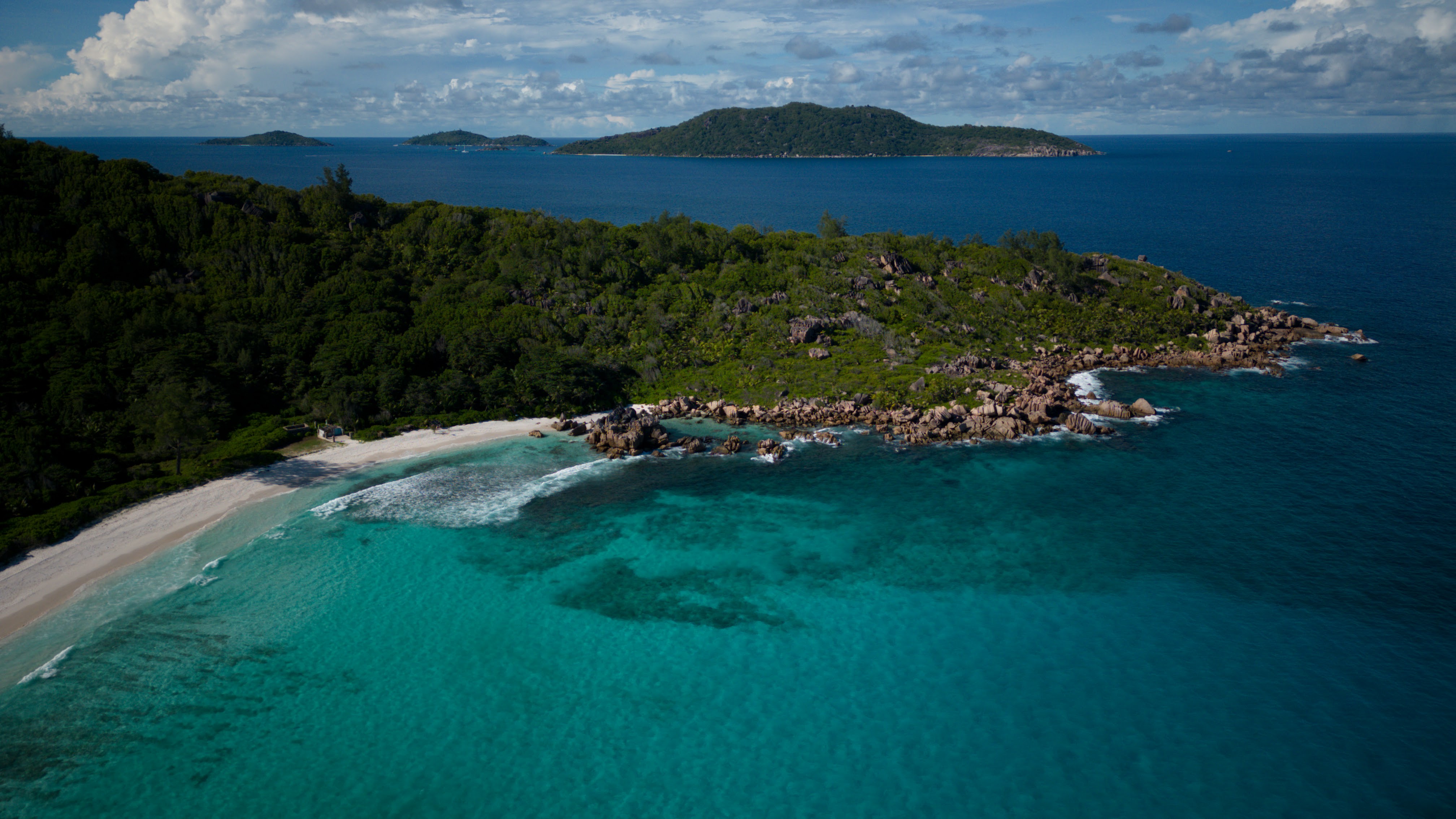
The Seychelles follow a different climate logic. The transitional months around April to May and October to November are considered calm and mild. The wind is weaker then, which makes beaches and swimming bays pleasant.
If you prefer granite rocks, green hills and hiking trails next to the beach, you will be happy there. If you mainly want overwater villas and wide lagoons, stay with the Maldives. You can compare both destinations side by side in one video call.
As a rule of thumb: the Maldives for reliable sun in the dry season, the Seychelles for a varied trip with nature in the quiet transitional months.