Ihre Ansprechperson: Arjeta · Swiss Vibes travel expert for Jabal Akhdar
Jabal Akhdar lies in the heart of the Hajar Mountains, around 2,000 metres above sea level, and has been home to the Al-Riyam and other Bedouin tribes for centuries. The villages such as Ash Shirayjah or Al Aqor seem abandoned at first glance, but behind the mud-brick façades lives a community that maintains its traditions with remarkable quiet and dignity. As a guest you are welcome, but you are a guest, and that should be kept in mind.
Clothing is the first thing people notice. In Oman, this applies on Jabal Akhdar just as it does in Muscat: shoulders, cleavage and knees should be covered, especially when you visit villages or mosques. This applies to women and men alike. A light linen scarf or a thin long-sleeved shirt in your rucksack costs nothing and shows respect, without anyone having to say a word. The locals will notice and appreciate it.
Photography is a sensitive subject. The women of the mountain villages, often in vivid, embroidered dresses, are not a photo subject without explicit consent. A smile, a nod, a brief question in Arabic or English often opens more doors than expected. ‘Mumkin sura?’ (‘May I take a photo?’) is a phrase worth learning. Respect a no without discussion.
Ramadan and religious holidays noticeably change everyday life on Jabal Akhdar. Eating, drinking and smoking in public during Ramadan is considered impolite and can in some contexts even have legal consequences, so check the current rules before your trip. Outside religious periods, life is relaxed, and Omanis are known for their hospitality. If someone offers you coffee and dates, accept: it is not an empty ritual but genuine warmth.
One last thought: Jabal Akhdar is not an open-air museum. The rose plantations, the ancient falaj irrigation systems and the pomegranate gardens are part of a living everyday life. Stay on marked paths, leave nothing behind and take nothing with you, not even a seemingly harmless stone. Travelling with real respect means leaving a place as if you had never been there, and yet leaving behind a connection that counts.
Experience Jabal Akhdar
 Hotel
Hanging Terraces | المدرجات المعلقة
HotelSAMA Al Khutaim Heritage Home
HoteldusitD2 Naseem Resort, Jabal Akhdar, Oman
 Experience
Hanging Terraces | المدرجات المعلقة
 Experience
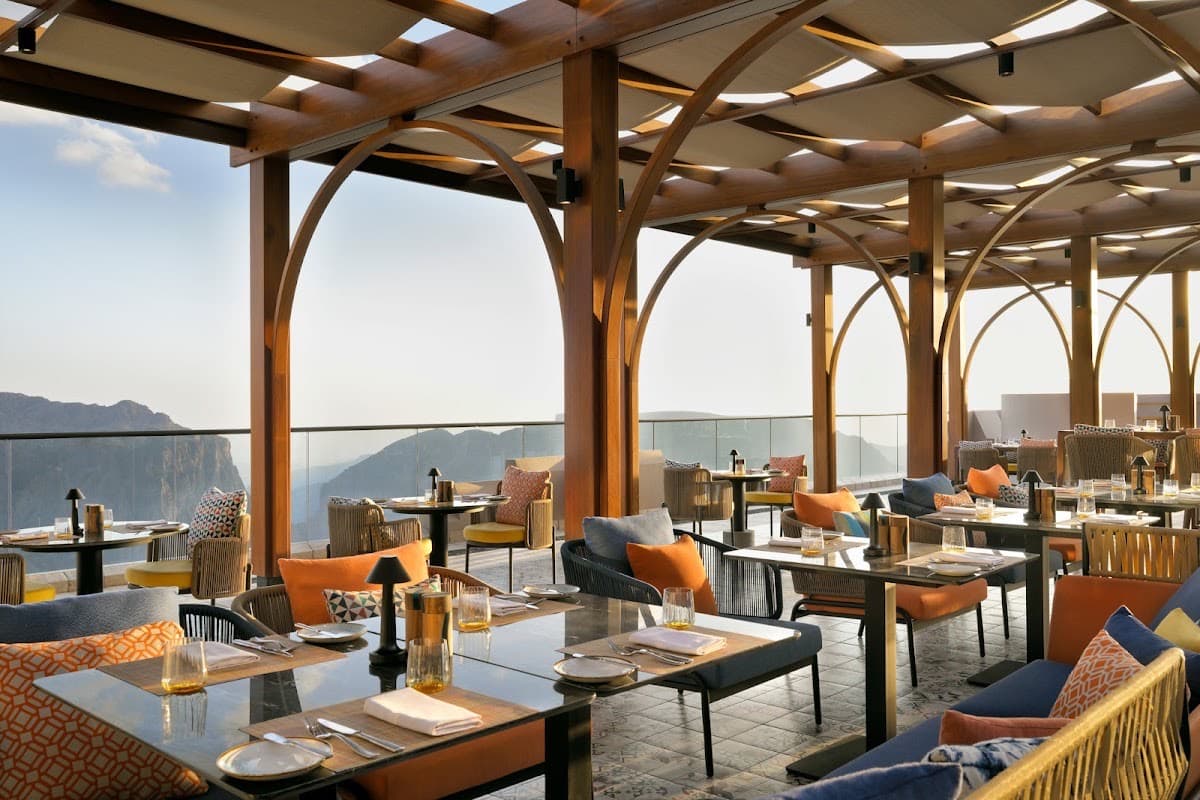
Hotel Indigo Jabal Akhdar Resort & Spa by IHG
 Experience
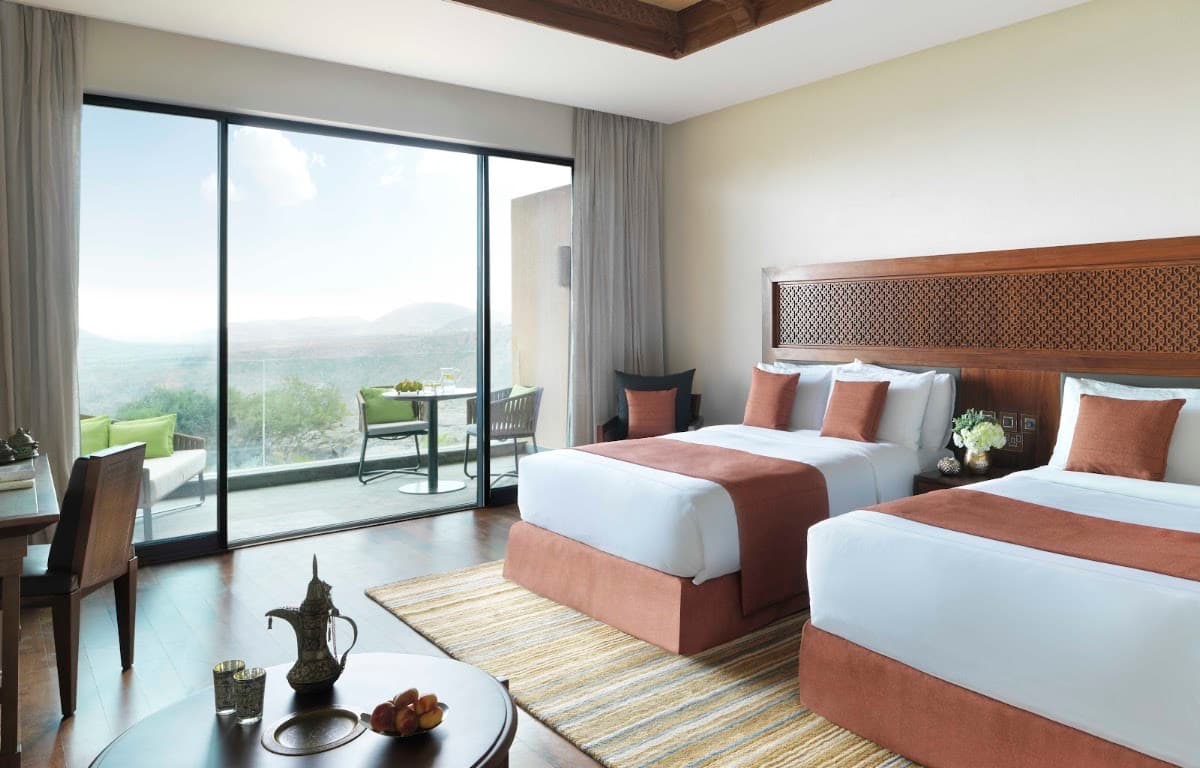
Anantara Al Jabal Al Akhdar Resort
Plush rooms in a posh desert resort offering an infinity pool, an open-air cinema & 6 restaurants.
Frequently asked questions
Do I have to wear a headscarf on Jabal Akhdar?
For women, a headscarf is not strictly required on Jabal Akhdar, but one is advisable when visiting mosques or religious places. Overall, modest, covering clothing is appropriate everywhere and is appreciated by the local population.
Can I walk around freely and take photos in the mountain villages?
In principle yes, as the villages are accessible and the people are friendly. However, never photograph people without their consent, especially women. Always ask first, respect a no, and keep to public paths. Private property and gardens are off limits without an invitation.
What is the best way to deal with language barriers?
English is mostly understood in the tourist areas of Jabal Akhdar, especially in the resorts. In the villages, Arabic is the everyday language. A few simple Arabic phrases (greetings, thank you, a polite request) open hearts and are received with real delight. A translation app on your phone is a practical companion.
 Halal Travel