Ratgeber
Self-drive safari in Namibia: what you should know
A self-drive safari in Namibia is possible, but it requires planning around distances, gravel roads, vehicle and time. Drive only if you feel confident on gravel roads, and check entry and driving licence requirements with the official bodies. Safari by Swiss Vibes discusses routes with you in a video consultation.
Von Swiss Vibes Safari, Stand
Schritt für Schritt
- Assess your experience on gravel roads honestly
- Plan the route with realistic daily distances
- Clarify vehicle type and equipment
- Secure accommodation in advance for the whole route
- Check driving licence, insurance and entry with the official bodies
- Discuss the emergency plan and spare-tyre rules with the rental company
Checkliste
- Valid driving licence and passport
- Licence requirements checked with the FDFA (EDA) or the rental company
- Daily distances not planned beyond daylight
- Petrol stations along the route noted
- Water and reserves in the vehicle
- Offline map loaded on your phone
- Rental company's emergency number saved
- Travel insurance with repatriation checked
Namibia is one of the countries where driving yourself on safari is common. Roads are long and often empty, and parks such as Etosha are accessible with your own vehicle. Even so, it is not a leisurely drive. This guide shows what to consider regarding route, vehicle, gravel roads and safety, and for whom a guided trip is a better fit.
Who self-driving suits
Self-driving suits guests who like driving themselves, bring time and handle a vehicle confidently off-road. You set the pace and the stops, stay at a waterhole as long as you like and are less dependent on group schedules.
It is less suitable if you shy away from long drives, like to have animals explained to you or have little experience with gravel. A guide sees many more animals and explains behaviour. A mix of self-driving and guided sections is often a good solution.
Driving on gravel has its own rules. Reduce your speed, keep large distances and watch for dust clouds from oncoming vehicles. Braking on loose ground lengthens the stopping distance, and sudden steering movements can become dangerous.
Distances, gravel roads and time
Namibia is big, and the distances between sights are long. Many stretches run over gravel. There you drive more slowly than you are used to on tarmac, and the journey takes longer than the map suggests.
Plan daily distances so that you arrive before dark. At night, animals on the road are a real risk. Better one stop fewer than a rushed day at the wheel.
Supplies are patchy. Petrol stations, shops and mobile reception are not available everywhere. Fill up early, take enough water and tell your accommodation your arrival time, so that in an emergency someone knows where you are.
Etosha and the waterholes
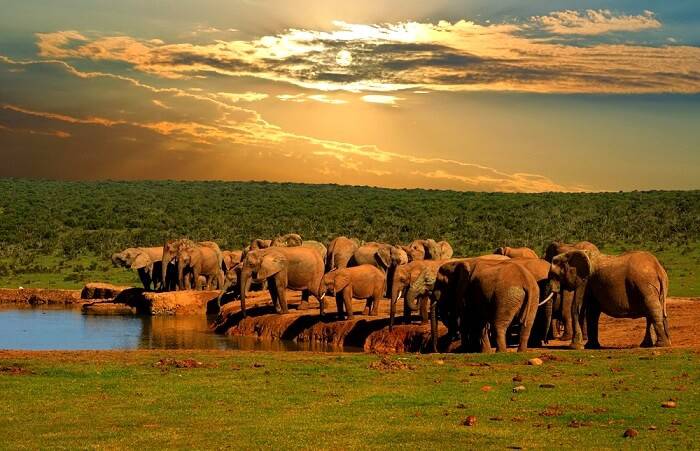
Etosha National Park is a classic destination for self-drivers. In the dry season animals gather at waterholes, where you can watch from the vehicle. The rules in the park also apply to self-drivers: stay in the vehicle, keep your distance, do not crowd the animals.
There is no sighting guarantee. Plan several nights in the area and visit the waterholes at different times of day. Check opening and gate times in the park shortly before the trip.
Accommodation should also be booked in advance. Finding a place spontaneously is difficult in peak season, and long stages make it almost impossible to divert. Plan the route so that every evening has a secure place.
Vehicle, insurance, equipment
Which vehicle is needed depends on the route and the season. For gravel roads, raised vehicles with good tyres are usual, and for more demanding stretches four-wheel drive too. Discuss with the rental company which routes are allowed and what the insurance covers.
Check early which driving licence you need, and find out about entry and documents from the FDFA and the rental company. We give no legal advice on this. Water, knowing how to change a tyre and an offline navigation system are part of the basic kit.
Observe the park rules. In Etosha, speed limits apply and getting out of the vehicle is prohibited. In addition, the gates close at sunset, and anyone who arrives too late has a problem. Check times shortly before the trip.
When a guide is the better choice
If you want to see animals purposefully, take photos or have landscapes explained, you benefit from a guide. He knows waterholes and habits and can read tracks. Families with small children also often travel more relaxed when someone else is at the wheel.
Many travellers combine both: a few days on their own, a few days guided. In the video call we compare such options for you and discuss openly which one suits you.
If you are unsure, choose a middle path: a vehicle with a driver for demanding sections and drive yourself where roads are good. In the video call we present suitable combinations and discuss what suits you.
Mind the travel time and weather
In the dry season gravel roads are usually easier to drive, and animals gather at waterholes. At night it can be cool inland and hot during the day. In the rainy season individual stretches can be difficult or closed.
Ask about current road conditions before the trip and check them on the way with your accommodation. Plan buffer time so that a closed stretch does not upset the whole trip.